
Private Label Supplement Manufacturing: A Practical Guide for Brand Owners
Launching a supplement line without owning a single piece of manufacturing equipment sounds almost too good to be true. It isn't — but it works only when the brand and the manufacturer agree, early, on who owns which decisions.
That's what private label supplement manufacturing is built to solve. It gives brand owners a way to launch, expand, or reorder products without building and operating their own facility. SMP Nutra works with supplement businesses at every stage — from first-time founders preparing an initial order to established brands planning larger reorders — and the projects that move fastest all start the same way: with clear answers on format, packaging, quantity, artwork status, deadline, and delivery needs.
What Is Private Label Supplement Manufacturing?
Private label supplement manufacturing lets a business sell a manufactured product under its own brand name. Instead of owning production equipment, managing a facility, sourcing every packaging component, and building an internal quality operation, the brand works with a supplement manufacturer that already has it all in place.
The two sides split the work along a simple line. The manufacturer carries out the agreed production process: confirming product format, planning the order, coordinating packaging, manufacturing the product, completing quality procedures, and preparing documentation. The brand owner keeps the commercial steering wheel — brand name, packaging preferences, artwork approval, sales channels, inventory planning, and customer acquisition.
Private label does not mean giving up control of the brand. The brand owner still decides:
Brand identity and visual direction
Label and packaging design
Sales channels and retail or e-commerce positioning
Initial order size and reorder timing
Shipping and fulfillment requirements
Where exactly that line falls depends on the project. Some brand owners arrive with print-ready label files and finished packaging specs. Others need help coordinating packaging, artwork, production, and logistics from scratch — and that's just as normal.
How the Private Label Manufacturing Process Works
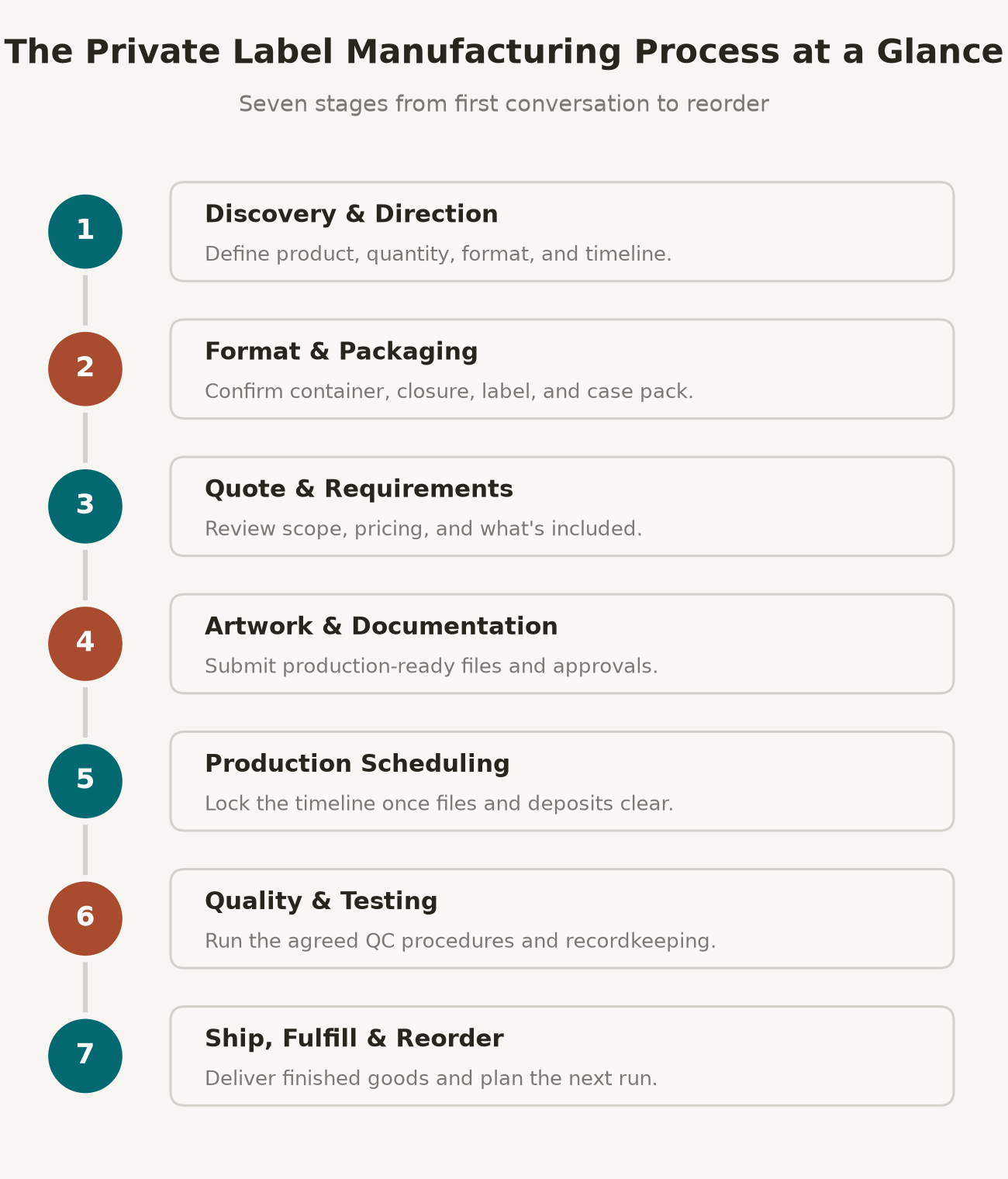
A private label project moves faster when the requirements are locked before production begins. The exact workflow varies by manufacturer, but most projects move through the same seven stages.
1. Project discovery and product direction
The first conversation establishes what the brand wants to manufacture and how it will be sold — product format, target quantity, packaging type, sales channels, artwork status, launch timeline, and shipping destination.
A first-time founder may only know the general product direction and a target launch date. An established brand may already have detailed specs, packaging dimensions, label files, and reorder forecasts. Neither situation is unusual — what matters is surfacing the missing decisions early, before they become delays.
2. Format, packaging, and order planning
With direction set, the brand and manufacturer confirm the production setup: unit count, container type, closure, label, carton requirements, case packing, and order quantity.
Packaging details matter more than they look. Two projects using a similar product format can require completely different sourcing, setup, labor, and scheduling. A standard bottle with a pressure-sensitive label follows a different production path than a bottle-plus-carton-plus-insert configuration built for several marketplaces at once.
3. Quote review and production requirements
Next, the manufacturer prepares a quote from the information gathered so far. A useful quote makes the scope legible — what's included, what isn't, and what still needs pricing.
Before approving, the brand should check the quote against nine things: minimum order requirements, unit or project pricing, packaging assumptions, artwork requirements, testing or documentation scope, freight and fulfillment terms, payment structure, estimated production timing, and anything explicitly excluded. A quote built on incomplete information will need revising once packaging, quantities, or production requirements change — so the earlier those are locked, the more the quote can be trusted.
4. Label, artwork, and documentation review
Before production starts, the manufacturer needs the files and approvals the project depends on: label artwork, packaging specifications, barcodes, shipping details, and brand sign-off.
This is where most delays actually happen. Artwork that looks finished on screen is not always production-ready — incorrect dimensions, missing bleed, low-resolution graphics, outdated copy, unconfirmed barcodes, and unapproved revisions all interrupt scheduling. Files should be submitted in the exact format the manufacturer requests, not the format that was easiest to export.
5. Production scheduling and manufacturing
Once requirements, payments, files, and approvals are complete, the project moves into production scheduling. Timing depends on raw material availability, packaging availability, equipment scheduling, order size, testing requirements, and how many approval steps are still open.
One habit saves real frustration here: treat the quoted lead time as part of a larger timeline, not the whole thing. The clock typically starts after the manufacturer has received the deposit, approvals, final files, and components — not when the first email was sent.
6. Quality procedures and testing documentation
During production, the manufacturer follows the quality procedures set for that product and facility. What documentation comes out the other side depends on the specifications, testing scope, and manufacturer — so it's worth confirming, in advance, which records or reports will be available and when.
7. Packaging, shipment, fulfillment, and reorders
Once production and packaging wrap, finished goods ship to the brand, a retailer, a distributor, an e-commerce warehouse, or a fulfillment provider. Case quantities, pallet requirements, receiving appointments, freight responsibilities, and routing instructions should all be confirmed before anything leaves the facility.
Reorder planning should start well before stock runs low — established products can still hit packaging availability, scheduling, or freight constraints on a second or third run.
Talk through your manufacturing requirements. Prepare your preferred format, packaging, quantity, artwork status, deadline, and fulfillment needs before contacting SMP Nutra — the clearer the inputs, the faster the path to an accurate quote.
Private Label vs. Custom Formulation
Private label and custom formulation solve different problems, and confusing the two is the fastest way to plan the wrong timeline.
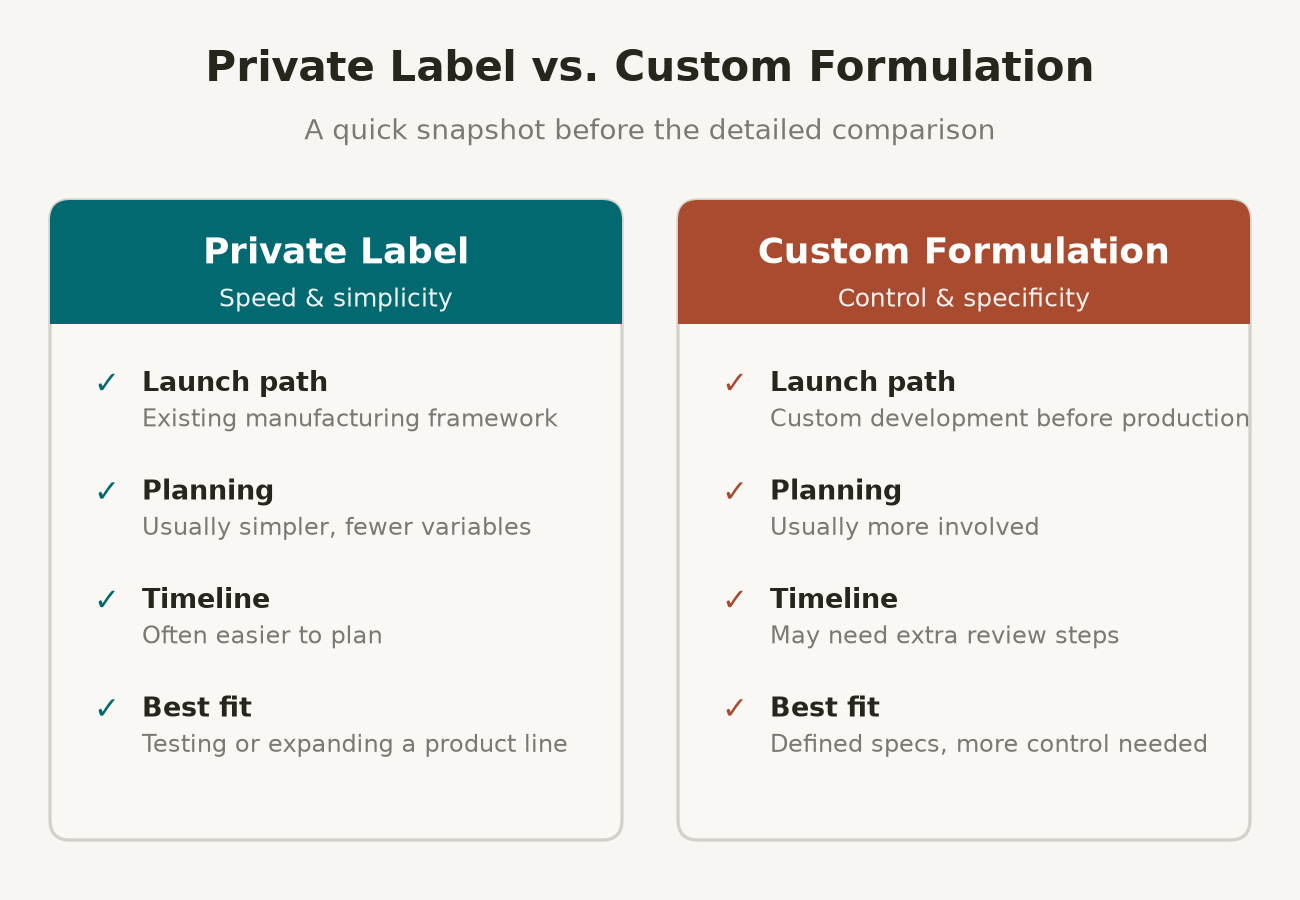
Private label starts with an established manufacturing framework — the brand selects from available directions, then makes decisions about packaging, labeling, quantity, and launch requirements. Custom formulation starts with a more specific product brief, where defined specifications, ingredient requirements, or serving requirements call for additional development and review before anything goes into production.
| Factor | Private Label | Custom Formulation |
| Launch path | Uses an existing manufacturing framework | Requires more development before production |
| Planning complexity | Usually simpler | Usually more involved |
| Timeline | Often easier to plan | May require additional review steps |
| Brand control | Control over branding, packaging, sales channels, and project choices | More control over detailed product specifications |
| Upfront decisions | Format, packaging, quantity, artwork, and logistics | Specifications, feasibility, development requirements, packaging, and production |
| Best fit | Brands testing or expanding a product line | Brands with defined specifications and more control requirements |
Private label tends to win on speed and lower planning complexity when a clear production path already exists. Custom formulation earns its place when the brand's requirements can't be met inside an existing private label framework. Neither is automatically "better" — custom doesn't mean superior, and private label doesn't mean basic. The right call depends on specifications, budget, timeline, order expectations, and how much development the product actually needs.
Who Private Label Manufacturing Is Best For
Private label manufacturing works for supplement businesses at very different stages. It's typically the right fit for:
First-time brand owners preparing a launch. A defined manufacturing path cuts down the number of production decisions needed before the first order.
Existing brands expanding into new formats or categories. Private label adds products without developing every project from a blank page.
Ecommerce and Amazon sellers, who need production, labeling, case packing, barcode coordination, shipping, and fulfillment planning working together.
Agencies managing projects for clients, coordinating multiple stakeholders, approval steps, and brand assets through one manufacturing partner.
Retailers and distributors building products for their own stores, accounts, or distribution networks.
Brands coordinating several vendors who want one manufacturing relationship to help align production, packaging, design, and logistics.
Businesses that don't want to own a manufacturing facility and would rather focus on sales, operations, inventory, and customer acquisition.
Private label is a poorer fit when a project needs specifications outside the manufacturer's available framework, when the brand can't meet the minimum order, has no realistic inventory plan, or expects production to start before final packaging and artwork are locked.
What Brand Owners Need to Prepare Before Requesting a Quote
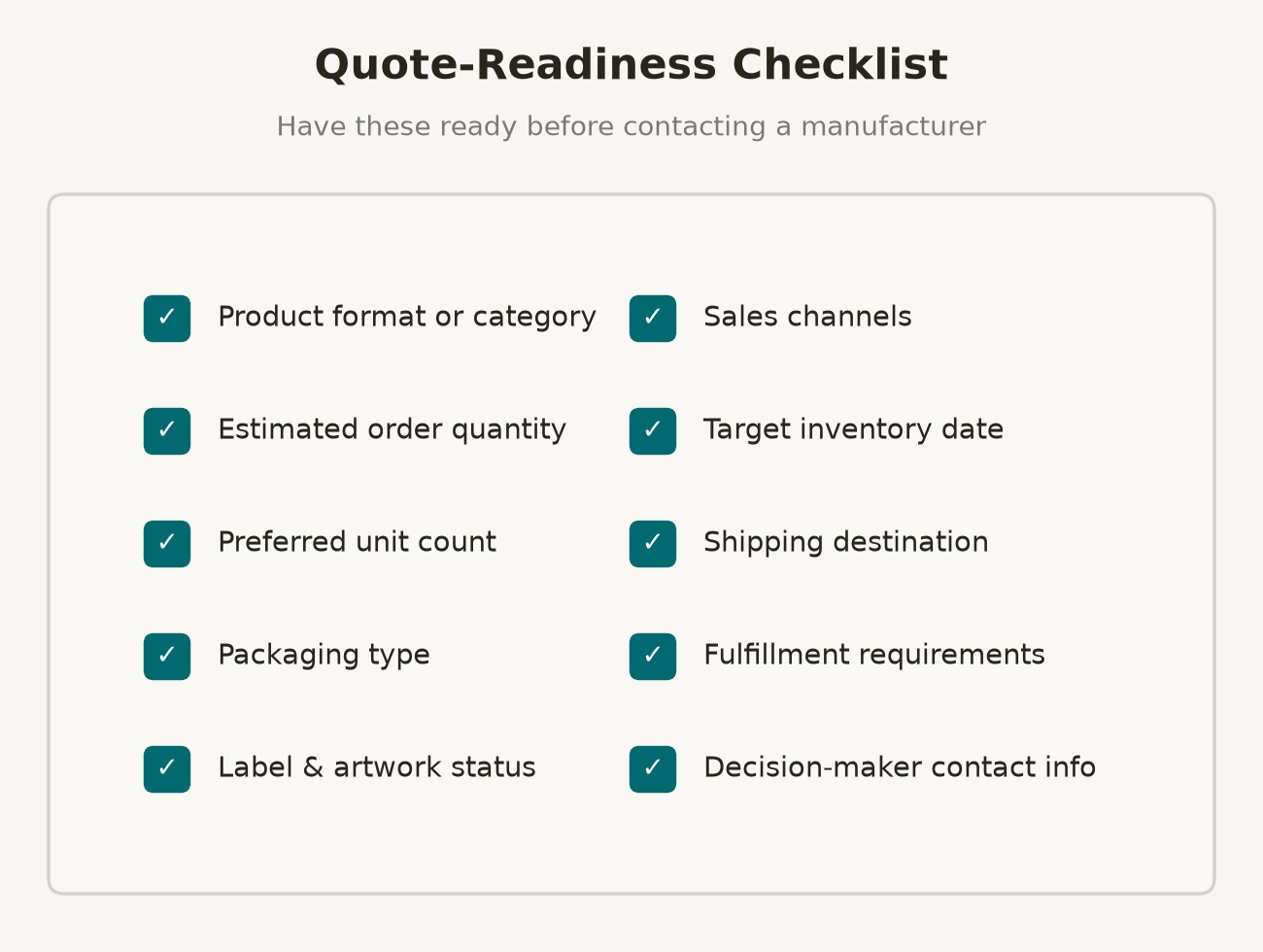
A manufacturer can only quote as well as the brand's request lets them. "How much does a supplement cost?" leaves too many variables open to answer meaningfully — a useful request narrows things down first.
Product format or category direction. State the format under consideration. If it's still undecided, explain the options on the table rather than sending an open-ended question.
Estimated order quantity or launch volume. Give a realistic range — this is what the manufacturer needs to evaluate minimums, packaging requirements, and production setup. Skip pricing requests for several unrelated quantities unless each one is a genuine scenario.
Packaging preferences. Identify the preferred bottle, jar, pouch, closure, label, carton, or other components, with reference images or specs when available. If nothing's been chosen yet, say so — the manufacturer can then explain which decisions come first.
Label and artwork status. Be precise about where the label actually stands: not started, in development, ready for review, approved internally, or a print-ready file. A visual mockup is not a production-ready artwork file, and treating it as one is a common source of delay.
Sales channel requirements. Amazon, direct-to-consumer, retail, distribution, and subscription businesses each carry different barcode, case packing, labeling, receiving, or fulfillment needs — say where the product is actually going to sell.
Target launch timeline. Give the date finished inventory is needed, not the date marketing is expected to begin. Work backward from that inventory date to leave room for quoting, approvals, packaging, production, documentation, freight, and warehouse receiving.
Fulfillment and shipping needs. State whether goods ship to one destination, split among locations, route to a fulfillment center, or move through a broader logistics setup.
Packaging, Labeling, and Brand Asset Considerations
Packaging isn't only a visual decision — it drives sourcing, quoting, equipment setup, label dimensions, packing requirements, freight, and production timing all at once.
Common packaging components show up in almost every project:
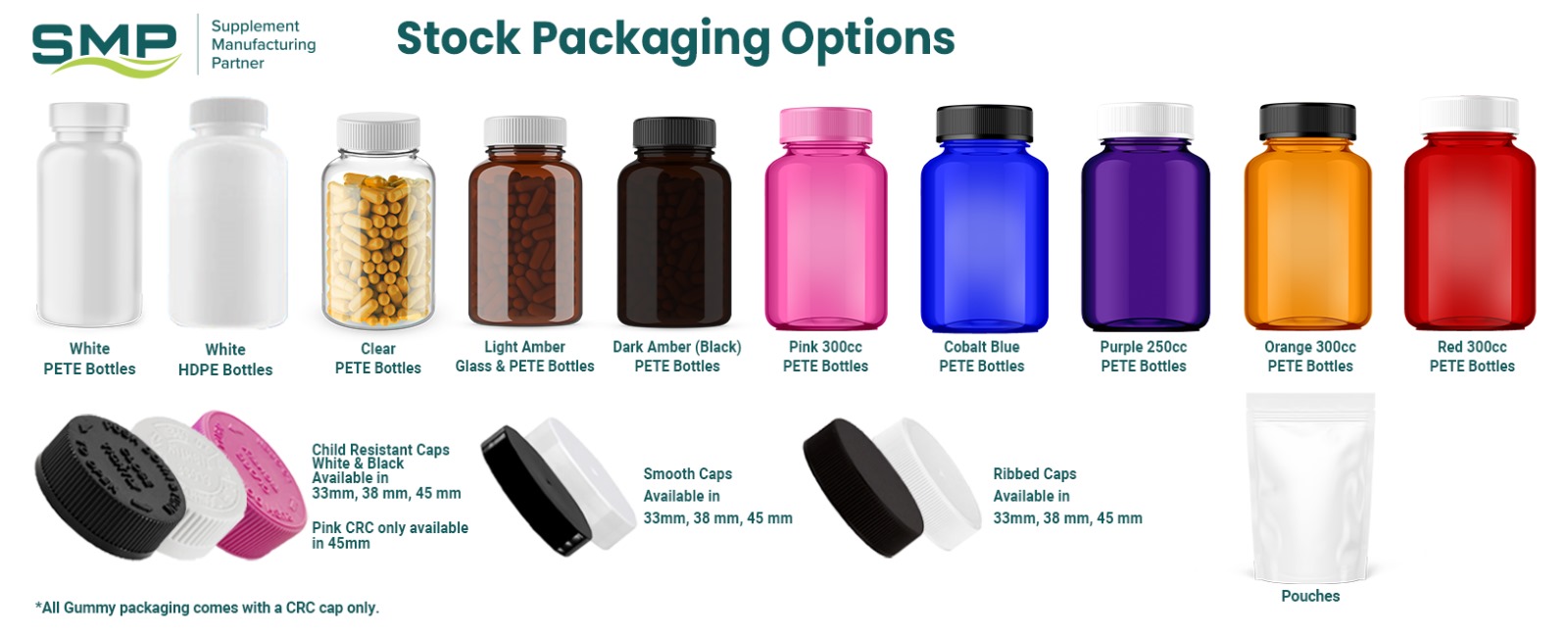
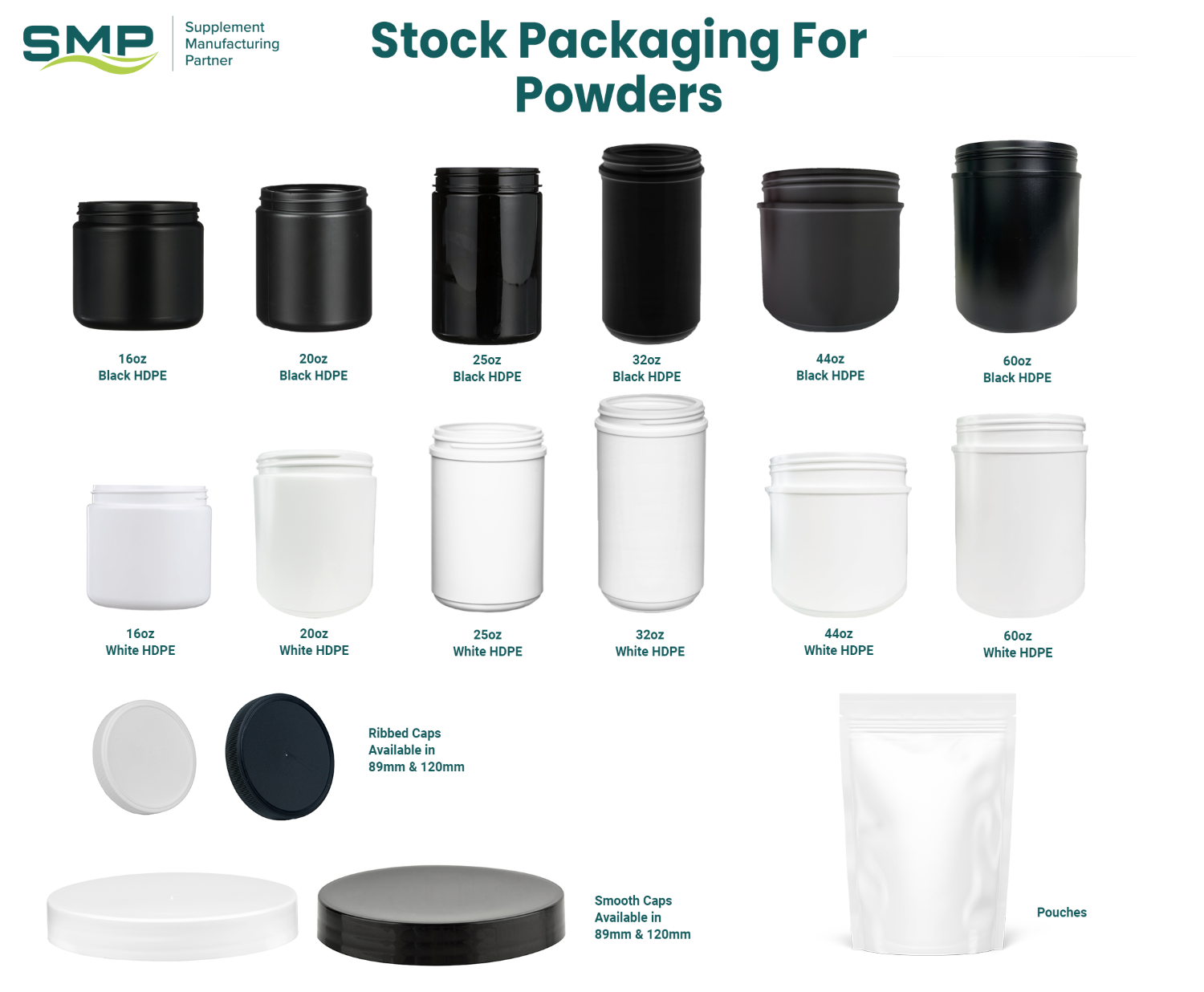
A packaging change made after quoting can ripple through the whole plan. Switching container sizes may require a different label die line, closure, case configuration, or shipping estimate. Adding a carton can introduce new artwork, printing, assembly, inspection, and sourcing steps that weren't in the original scope. Brand owners should treat packaging decisions as confirmed — not tentative — before treating a quote or timeline as final.
Label artwork also has to match the selected container and production specifications exactly. Designers should work from the correct dimensions and file requirements, not estimate from a product photograph. Photography, 3D renders, and marketplace images can help prepare for launch, but they should be coordinated with the final packaging — building retail assets before the container, label size, or closure is confirmed is a reliable way to end up redoing them.
When design and manufacturing are handled by different vendors, assign one person to own revisions. Multiple file versions floating between team members create approval confusion and raise the odds that an outdated file slips into production.
Quality, Testing, and Documentation in Private Label Manufacturing
Quality requirements belong in the manufacturing scope from day one — not as an afterthought raised after production starts.
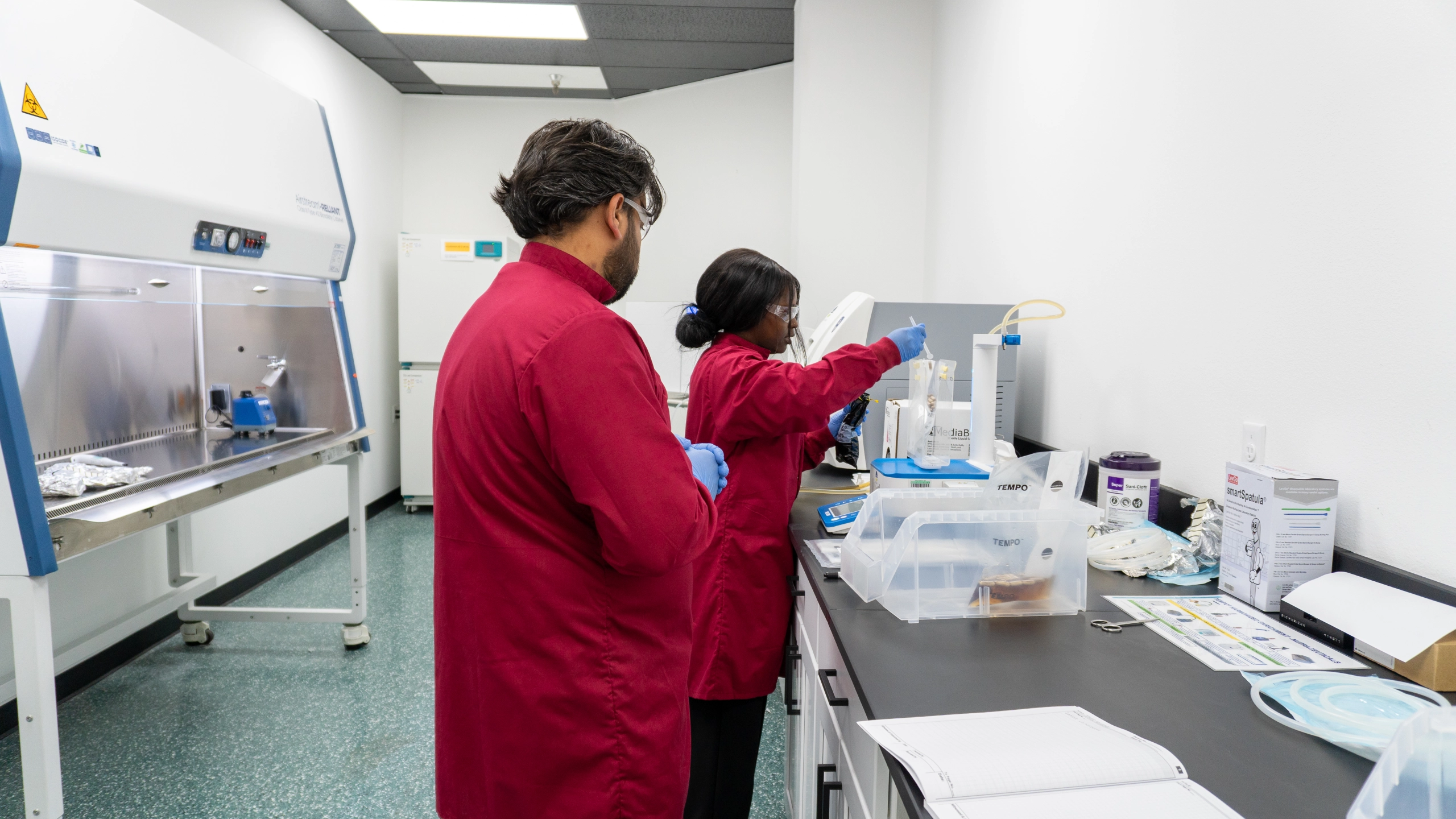
Exact procedures and documentation depend on the product, manufacturer, specifications, testing plan, and project agreement, so it's worth asking direct questions about what's performed, what's recorded, and what can actually be supplied:
Product or material identity
Written specifications
In-process controls
Finished-product review
Batch or lot records
Certificates of analysis
Third-party laboratory reports
Packaging and label controls
Lot coding and traceability
Document retention and release procedures
A certificate of analysis (COA) reports results tied to specified tests or requirements. Brands should confirm what the document covers, which party issued it, what methods or specifications apply, and whether it's tied to the relevant batch or lot. Third-party testing may be included, optional, or required depending on the project — confirm the scope before approving the quote, since adding requirements after production planning starts can affect cost and timing.
Testing documentation supports defined quality, identity, specification, and documentation requirements. It is not proof that a product will create a specific consumer result. Brands should also settle who receives the documentation, when it becomes available, and where it's stored — this matters the moment a retailer, distributor, or marketplace partner asks for records.
How MOQ, Cost, and Lead Time Affect Planning
Minimum order quantity, project cost, and lead time aren't three separate conversations — they're one conversation with three names. A change in any one of them almost always moves the other two.
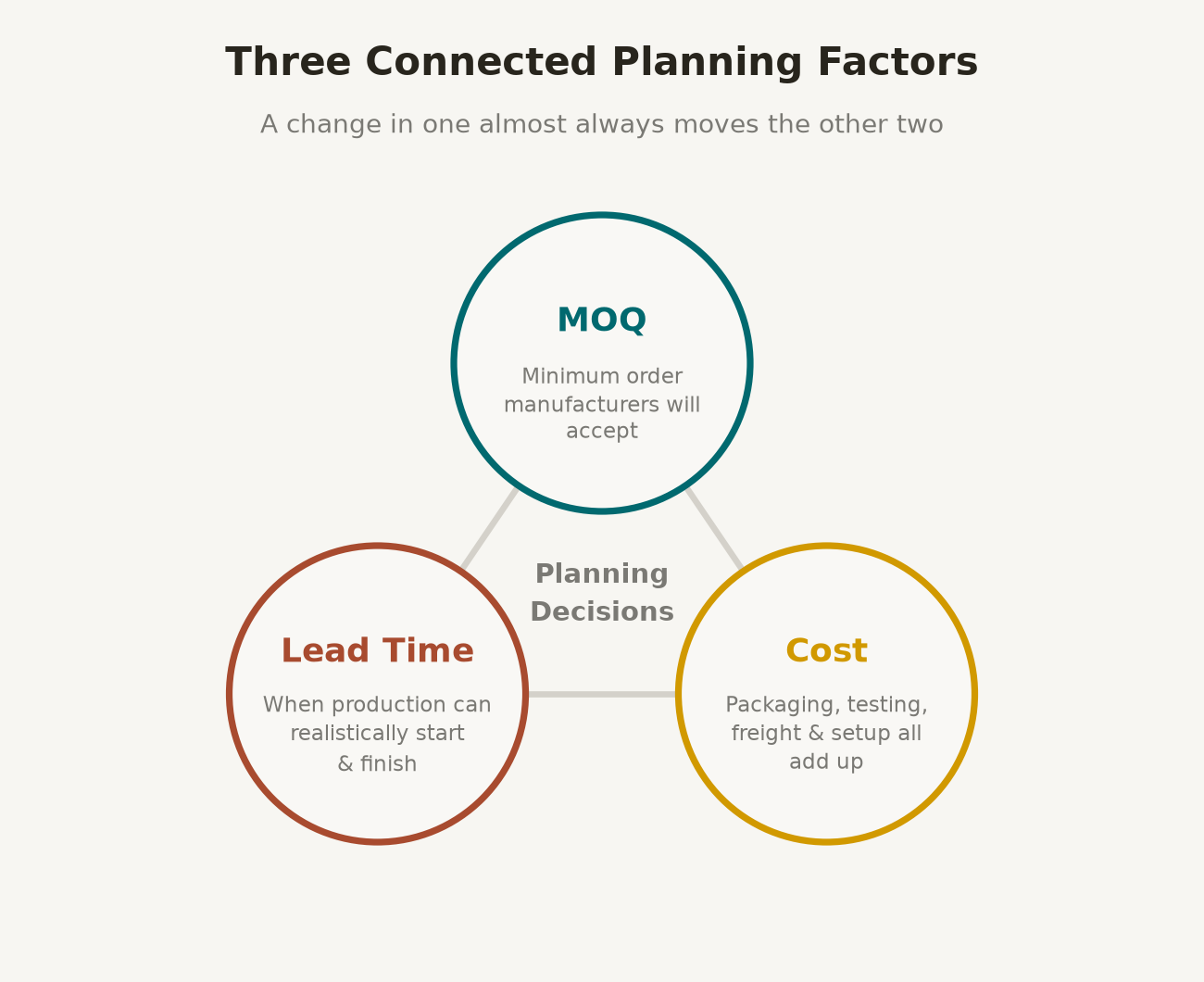
| Planning Factor | Why It Matters |
| MOQ | Sets the minimum production run or order requirement for the project |
| Packaging | Can affect sourcing, setup, label review, and production scheduling |
| First order vs. reorder | First orders often require more setup, review, and approval steps |
| Launch deadline | Determines how early the brand should prepare artwork, quote details, and logistics |
| Order complexity | Additional components or configurations can add sourcing and production steps |
| Shipping plan | Freight, receiving appointments, and split shipments can affect the delivery schedule |
Minimum order quantity. MOQ is the minimum quantity a manufacturer will accept for a given project, shaped by format, production process, packaging setup, and component purchasing requirements. Choosing an order quantity on unit cost alone ignores cash flow, storage, expected sales, and reorder timing — order too little and freight and production costs recur too often; order too much and cash sits in inventory longer than planned.
Project cost. Cost is shaped by more than the product itself — packaging, labels, cartons, testing, design work, setup, freight, fulfillment, and special handling all add to the total. Compare quotes on equivalent scopes; a lower number may simply exclude services, components, documentation, or logistics that a competing quote includes.
First orders and reorders. The first order takes the most coordination — specifications, packaging approval, artwork review, recordkeeping, and shipping requirements all get established for the first time. Reorders follow a more familiar path, but packaging may need resourcing, artwork may have changed, and the production schedule can look different from the first run.
Lead time. Ask what event actually starts the clock and what could pause or reset it — deposit received, quote or purchase order approved, artwork approved, packaging confirmed, materials available, or documentation completed. A launch plan should always leave time after production for freight, warehouse receiving, inventory reconciliation, marketplace prep, and the inevitable unexpected correction.
How to Choose a Private Label Supplement Manufacturer
Price matters, but it shouldn't be the only filter. A manufacturer that can't support the required format, packaging, documentation, communication, or reorder plan tends to create higher costs later — just later enough to be painful.
Review facility capabilities and format support. Confirm the manufacturer actually supports the format and production requirements under consideration — equipment, packaging configurations, order ranges, and project limitations included. Don't assume every supplement manufacturer handles every format or package.
Evaluate packaging and design support. Find out whether the manufacturer supplies packaging, works with approved vendors, accepts brand-supplied components, or requires a specific process. Ask who owns selecting packaging, providing die lines, preparing artwork, reviewing files, ordering printed components, approving proofs, and managing revisions — clear ownership is what actually prevents delays.
Ask about quality systems and documentation. Request a real explanation of the quality workflow, not a vague overview. Ask for specific document names and project requirements, and confirm what's included versus what costs extra time or money.
Review quote clarity. A strong quote makes the scope legible — clear quantities, packaging assumptions, included services, payment requirements, estimated timing, and exclusions. When comparing proposals, make sure every manufacturer is pricing the same project; one quote may include packaging and testing while another quietly excludes them.
Evaluate production communication. Manufacturing involves approvals, revisions, deadlines, and dependencies — ask who manages the account, how updates arrive, and how problems get escalated. Slow or unclear communication during quoting is usually a preview of the production experience, not an exception to it.
Plan for reorders and scale. Ask how reorders should be submitted, how much notice is recommended, whether packaging components can be reserved or forecast, what happens if volume increases, and whether unit or packaging changes trigger a new setup. The right manufacturing relationship fits both the immediate order and the brand's realistic growth plan.
Confirm fulfillment and logistics support. Some brands only need finished goods shipped to one warehouse; others need split shipments, retailer routing, or ecommerce fulfillment. Clarify what the manufacturer provides directly and what has to be handled by another vendor.
FAQ: Private Label Supplement Manufacturing
What is private label supplement manufacturing?
Private label supplement manufacturing is an arrangement in which a manufacturer produces and packages a supplement product that another business sells under its own brand. The manufacturer handles agreed production responsibilities, while the brand owner controls branding, sales channels, positioning, inventory planning, and other commercial decisions.
How does private label supplement manufacturing work?
The brand provides its project requirements — product direction, quantity, packaging, artwork status, timeline, and shipping needs. The manufacturer reviews the request, prepares a quote, confirms production requirements, coordinates approvals, schedules manufacturing, completes the agreed quality procedures, packages the order, and arranges shipment or fulfillment support.
What does a brand owner control in a private label project?
Generally the brand name, visual identity, packaging direction, label approval, sales channels, launch plan, order quantity, pricing strategy, marketing, and distribution decisions. Available product and packaging choices may depend on the manufacturer's capabilities and project requirements.
How is private label different from custom formulation?
Private label usually uses an existing manufacturing framework and predefined formula, which reduces development requirements and makes the project easier to plan. Custom formulation begins with more detailed product specifications and may require feasibility review, development work, or additional approvals before production.
What information should I prepare before requesting a quote?
Product format, estimated quantity, unit count, packaging preferences, artwork status, sales channels, target inventory date, shipping destination, and fulfillment needs. The more clearly these are defined, the more accurately the manufacturer can scope the project.
Can packaging and labels affect the production timeline?
Yes. Packaging components may need to be selected, sourced, printed, reviewed, and delivered before production can be completed. Incorrect label dimensions, unfinished artwork, delayed approvals, custom components, or packaging changes can extend the schedule.
What documentation should I ask a manufacturer for?
It depends on the project — ask what specifications, certificates of analysis, test reports, batch records, lot information, quality records, and other documents are available, and confirm whether requested testing or documentation is included in the quote.
Is private label manufacturing a good fit for first-time brand owners?
Often, yes. It can offer a more direct production path than building a manufacturing operation or developing every project from scratch. First-time owners still need a realistic budget, clear packaging decisions, a sales plan, inventory expectations, and enough time built in for approvals and production.
Download the Full PDF Guide Here
Request a Private Label Manufacturing Quote
A useful manufacturing conversation starts with a defined project, not an open-ended question.
Before contacting SMP Nutra, prepare your preferred product format, packaging type, estimated order size, unit count, artwork status, target inventory date, sales channels, shipping destination, and fulfillment requirements — plus any open questions that still need manufacturer input. SMP Nutra can review these details, identify the next planning steps, and talk through the manufacturing scope for your brand.
Manufacturing Price Quote
Fill out the form below and our team will get back to you with a custom quote for your supplement manufacturing needs.